Assessment of Waste Types
Identify the different types of waste generated on-site to tailor your management practices effectively.
In an era where sustainability is paramount, the construction industry faces increasing scrutiny regarding waste management practices. The significance of handling construction waste effectively can no longer be overlooked; it not only ensures compliance but also enhances project efficiency and environmental stewardship. Are you ready to transform your waste management strategy and contribute to a greener future?
This visual highlights the essential components for a comprehensive waste management plan in construction projects.
Identify the different types of waste generated on-site to tailor your management practices effectively.
Outline local recycling facilities available and the materials they accept to maximize recycling efforts.
Specify proper disposal methods for hazardous and non-hazardous waste to ensure compliance and safety.
Detail any training needed for staff on waste handling and disposal methods to promote safety and efficiency.
When it comes to construction projects, effective waste disposal is more than just a necessity; it’s a critical strategy for enhancing efficiency and sustainability. At Rubbish Lift, we know that handling construction waste the right way not only saves time and money but also contributes to a cleaner environment. By implementing solid waste management strategies, contractors can significantly minimize their impact while keeping their projects on track.
One of the first steps in this process is understanding the importance of having a robust waste management plan. A comprehensive plan outlines how to handle waste right from the start of a project to the finish, ensuring that everyone involved is on the same page. This approach not only helps in reducing the amount of waste produced but also facilitates recycling and reuse, which is a core value we uphold at Rubbish Lift.
A waste management plan lays the groundwork for effective waste disposal and recycling practices. It's vital that all team members understand this plan and their roles within it. A well-structured plan helps to identify waste streams, including materials that can be recycled or repurposed, which ultimately reduces the burden on landfills.
Here are some key components that should be included in any waste management plan:
Creating a comprehensive waste management plan involves more than just listing materials. It requires collaboration among team members to ensure that everyone understands their responsibilities. For example, contractors should work closely with site managers to outline the workflow for waste and establish clear guidelines for disposal.
Consider incorporating the following steps when crafting your plan:
Setting diversion goals is crucial to track how much waste is being recycled versus sent to landfills. By establishing measurable objectives, contractors can assess the effectiveness of their waste management strategies over time. This not only enhances accountability but also fosters a culture of sustainability among team members.
Some effective strategies for setting and measuring these goals include:
Effective waste disposal starts even before the first nail is driven. Pre-project planning is key to minimizing waste throughout the construction process. By conducting a thorough assessment of what materials are needed, contractors can significantly reduce overages, which often leads to excess waste.
Here are some tips to keep in mind during the planning phase:
Pre-project waste audits are a valuable tool for identifying potential waste issues before they arise. By reviewing past projects, contractors can pinpoint where waste tends to pile up and take proactive measures to mitigate it. This approach allows for smarter decisions regarding material purchases and resource allocation.
Consider the following steps when conducting a waste audit:
Estimating material needs accurately is one of the best ways to ensure that waste is kept to a minimum. Many contractors face the challenge of ordering too much material, which often ends up in dumpsters. By refining the estimation process, you can not only save money but also contribute to a more sustainable project.
Some effective tactics to improve your estimation process include:
Once the project is underway, having a solid on-site waste management strategy is essential. By implementing effective waste management practices, contractors can ensure that their project stays organized and efficient. At Rubbish Lift, we emphasize the importance of maintaining a clean job site to enhance safety and productivity.
Here’s how to effectively manage waste on-site:
Source sorting is an effective way to manage waste on construction sites. By sorting waste materials as they are generated, you can significantly increase recycling rates and reduce the amount of waste sent to landfills. This practice not only benefits the environment but also improves site safety and organization.
To implement source sorting successfully, consider:
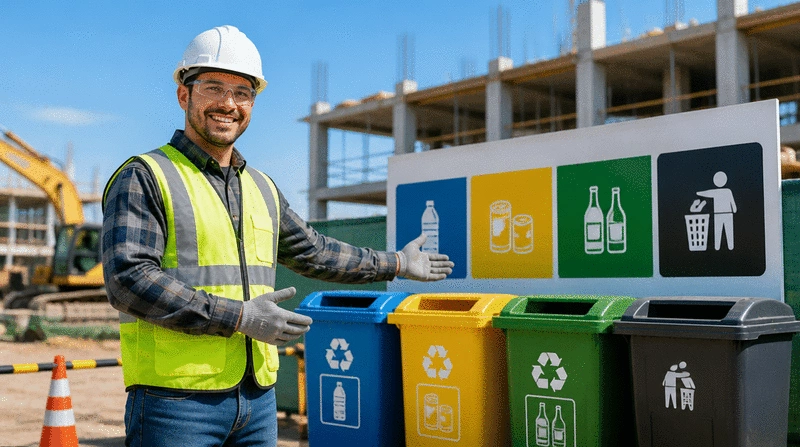
Using labeled bins and dumpsters is crucial for successful waste management on-site. Proper labeling helps everyone understand where to dispose of materials, which minimizes contamination and increases recycling rates. Ensuring that the right containers are available and accessible can make a big difference.
Consider the following best practices:
Training is an essential component of effective waste management. By educating your crew about their responsibilities regarding waste disposal, you set the standard for a tidy and efficient worksite. This investment in training pays off by reducing waste and improving overall site productivity.
To ensure effective training, consider:
Regular clean-up is critical for maintaining an organized and safe construction site. When debris is left unchecked, it can lead to accidents and inefficiencies. Establishing a routine clean-up schedule can help keep waste management efforts on track.
Some effective clean-up tips include:
In today’s construction industry, innovation plays a significant role in minimizing waste. By embracing new approaches, contractors can improve their efficiency and sustainability. At Rubbish Lift, we’re always on the lookout for inventive solutions that help our clients successfully manage waste.
Here are some innovative strategies to consider:
Did you know that implementing a digital waste management system can significantly enhance your efficiency? By utilizing software that tracks waste generation and disposal in real-time, you can make informed decisions, quickly adjust your strategies, and even identify opportunities for further waste reduction. This not only saves time but can also lead to substantial cost savings throughout the duration of your project.
As we wrap up our discussion on effective construction waste disposal, it's essential to highlight the key takeaways that can significantly impact your projects. Having a solid waste disposal strategy in place not only streamlines the cleanup process but also helps you meet regulatory requirements and enhances your reputation in the industry. Remember, a well-planned approach can save you time and money while reducing your environmental footprint.
Let’s recap some essential tips for waste management:
For contractors, the importance of continuous improvement cannot be overstated. Regularly monitoring your waste management practices will allow you to identify areas for improvement. As you adapt to new challenges in your projects, revisiting and refining your strategies will pave the way for greater efficiency and less waste. This proactive approach is vital for maintaining a sustainable business model in today’s competitive market.
Emphasizing ongoing training and awareness among your team will also contribute to a culture of accountability regarding waste management. Sharing successes and learning from setbacks will keep your crew engaged and focused on achieving your waste reduction goals.
Here’s a quick recap of the most important aspects of waste management for contractors:
As we move forward, it’s crucial to keep learning and adapting. To help you in this journey, we offer various downloadable templates and checklists designed to simplify waste management planning. These resources can serve as handy references in your daily operations, ensuring that you have the tools you need to stay organized and efficient.
Additionally, exploring links to relevant EPA resources and case studies can provide valuable insights into best practices within the industry. Staying informed will empower you to make better decisions regarding waste disposal while enhancing your project’s sustainability.
Consider downloading our free resources, including:
Now, it’s your turn! I encourage you to share your personal experiences and tips regarding waste management in the comments below. What has worked for you? What challenges have you faced? Your insights could help others in the community as they strive for better waste disposal practices.
Additionally, don’t hesitate to utilize available tools and services, like those offered by Rubbish Lift, to streamline your waste disposal processes. Collaborating with professionals who understand the unique challenges of construction waste can make a world of difference in achieving your project goals.
Lastly, if you’re looking to elevate your waste management strategy, consider partnering with environmental consultants. Their expertise can provide valuable guidance on best practices tailored to your specific needs, ensuring your projects not only meet regulations but also stand out as environmentally responsible.
Here is a quick recap of the important points discussed in the article:
As we move forward, it’s crucial to keep learning and adapting. To help you in this journey, we offer various downloadable templates and checklists designed to simplify waste management planning. These resources can serve as handy references in your daily operations, ensuring that you have the tools you need to stay organized and efficient.
Additionally, exploring links to relevant EPA resources and case studies can provide valuable insights into best practices within the industry. Staying informed will empower you to make better decisions regarding waste disposal while enhancing your project’s sustainability.
Consider downloading our free resources, including:
Now, it’s your turn! I encourage you to share your personal experiences and tips regarding waste management in the comments below. What has worked for you? What challenges have you faced? Your insights could help others in the community as they strive for better waste disposal practices.
Additionally, don’t hesitate to utilize available tools and services, like those offered by Rubbish Lift, to streamline your waste disposal processes. Collaborating with professionals who understand the unique challenges of construction waste can make a world of difference in achieving your project goals.
Lastly, if you’re looking to elevate your waste management strategy, consider partnering with environmental consultants. Their expertise can provide valuable guidance on best practices tailored to your specific needs, ensuring your projects not only meet regulations but also stand out as environmentally responsible.
Ethan Grayson is a seasoned expert in waste management and rubbish removal, committed to providing practical solutions for both residential and commercial needs. With years of experience in the field, Ethan specializes in efficient hauling services that cater to contractors, landlords, and homeowners undergoing renovations. His no-nonsense approach and dedication to transparent pricing make him a trusted voice in the industry.